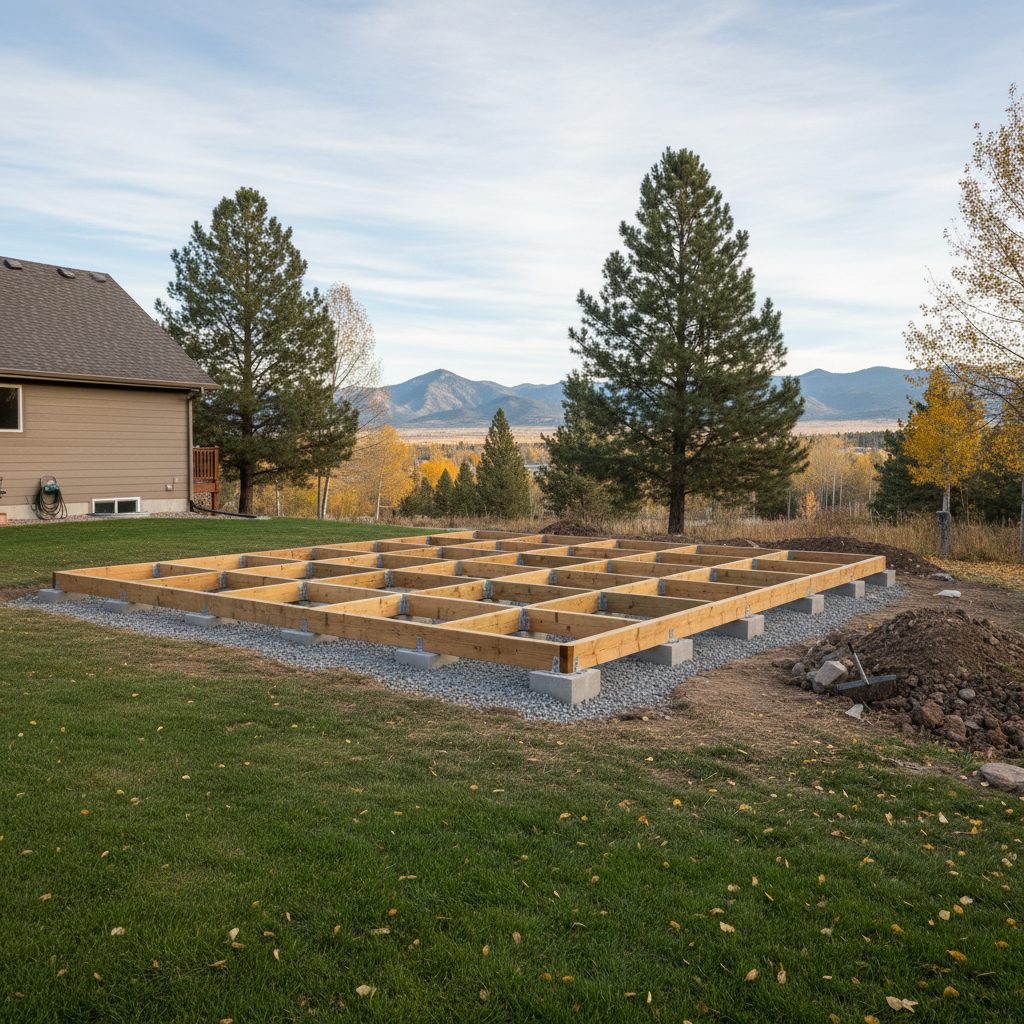
Planning a new shed for your place in Helena? Awesome! A good shed adds a ton of value and usefulness. But before you even think about the walls or the roof, you've got to get the foundation right. And believe me, after years of building custom sheds around here, I've seen just about every mistake in the book when it comes to foundations. You really don't want to regret this part, because fixing a bad foundation later? That's a nightmare.
Ignoring Site Prep: It's More Than Just Leveling
This is probably the biggest one. Folks think they can just clear a spot, maybe throw down some gravel, and call it good. Nope. That's a recipe for disaster. The ground in Helena, especially in areas like the North Valley or up towards MacDonald Pass, can be a real mix – from rocky to clay-heavy. You've got to properly prepare the site. That means:
- Not dealing with drainage: Water is the enemy of any foundation. If your site slopes towards where the shed will be, or if water naturally pools there, you need to address it. French drains, proper grading, or even a raised foundation can save you a world of trouble down the line. I've seen sheds settle unevenly because water was constantly undermining one side, and boy, was that a mess.
- Skipping soil compaction: You can't just put a foundation on loose soil. It'll settle, shift, and crack. You need to remove organic material, bring in good base material like crushed gravel, and compact it properly. This isn't just for concrete slabs; even a gravel pad needs a solid, compacted base.
- Forgetting about frost heave: Our winters here in Montana are no joke. The ground freezes and thaws, pushing things around. If your foundation isn't dug deep enough or properly designed to handle frost heave, your shed will eventually start to shift and crack. That's why piers or footings need to go below the frost line, which can be 48 inches or more here.
Underestimating Foundation Type for Your Shed
Not all sheds need the same foundation. A small, lightweight garden shed for your tools is different from a heavy workshop or a custom office shed. I've seen people try to put a substantial, heavy shed on a few patio blocks or a thin, unreinforced concrete slab. It just won't hold up.
- Using a gravel pad for too much weight: Gravel pads are great for many sheds, especially smaller ones or those that need good drainage. But if you're storing heavy machinery, a lot of lumber, or turning it into a livable space, a gravel pad might not provide the stability or load-bearing capacity you need. You'll end up with an uneven floor, doors that stick, and a shed that's constantly under stress.
- Skimping on concrete slab reinforcement: If you go with a concrete slab, don't skip the rebar or wire mesh. Concrete is strong in compression but weak in tension. Without reinforcement, it'll crack under stress, especially with our temperature swings. A 4-inch slab with proper reinforcement is usually a minimum for anything significant.
- Not considering accessibility: Think about how you'll use the shed. Do you need a ramp? Will heavy equipment be rolled in? This affects the height and approach to your foundation.
Hiring the Wrong Help (or Doing it Yourself Poorly)
Look, I'm all for DIY, but some projects are best left to folks who do it every day. Foundation work is one of them. It's the literal bedrock of your shed. If you're not experienced, you're likely to make mistakes that are costly to fix.
- Going with the cheapest bid without checking references: We've all seen those 'too good to be true' prices. Often, they are. A contractor who gives you a rock-bottom price might be cutting corners on materials, labor, or proper techniques. Ask for references, look at their past work, and make sure they're insured. You don't want someone learning on your dime.
- Not getting a clear scope of work: Before any dirt is moved, you need a detailed understanding of what the contractor will do. What materials will they use? How deep will they dig? What's the compaction plan? What about drainage? Get it all in writing.
- Ignoring local codes and permits: Depending on the size and type of your shed, you might need permits from the city or county. Ignoring these can lead to fines, stop-work orders, or even having to tear down your shed. A good contractor will know what's required in Helena.
At Custom Sheds Helena, we make sure the foundation is solid before we even think about putting up walls. It's not the glamorous part of the project, but it's the most important. Do your homework, ask the right questions, and don't cut corners. Your future shed (and your wallet) will thank you for it.